The Birth of the Tech Investor Portmanteau

A couple months ago, I examined a few tech investors through an artistic lens. This time I thought I’d let the word nerd in me out to play. Instead of deconstructing an investor’s creative Twitter, I thought a more literal approach would be appropriate here. And then it hit me: tech investor portmanteau mashups!

A portmanteau is a combination of words and phonetic sounds to form something new, like smoke + fog = smog. This being the case, I naturally wondered if the same dynamic could be applied to the tech investors we all know and love (and indeed it can be!). Thus the tech investor portmanteau is born. Because every badass tech investor needs a single-name moniker ;D

Investors:

1. Jason + Calacanis = Jalacanis (seed investor)

2. Hunter + Walk = Wunter (Homebrew)

3. Marc + Andreessen = Mandreessen (Andreessen Horowitz)

4. Ben + Horowitz = Borowitz (Andreessen Horowitz)

5. Fred + Wilson = Frilson (Union Square Ventures)

6. Chris + Sacca = Chracca (Lowercase Capital)

7. Aileen + Lee = Laileen (Cowboy Ventures)

8. Steve + Sinofsky = Stinofsky (Andreessen Horowitz)

9. Peter + Thiel = Teter (Founders Fund)

10. Sam + Altman = Saltman (Y Combinator)

11. Beth + Seidenberg = Beidenberg (Kleiner Perkins Caufield & Buyers)

12. Josh + Felser = Jelser (Freestyle Capital)

13. Ron + Conway = Ronway (SV Angel)

14. Dave + McClure = DacClure (500 Startups)

15. Jessica + Livingston = Jivingston (Y Combinator)

16. Sarah + Guo = Guarah (Greylock Partners)

17. Marissa + Campise = Camprissa (Greycroft Partners, SoftBank Capital)

18. Brad + Feld = Frad (Foundry Group)

19. Morgan + Beller = Borgan (Andreessen Horowitz)

20. Chris + Dixon = Chrixon (Andreessen Horowitz)

The Hit List: 20 Demos, Albums and EP’s You Need to Hear Right Now — July 13, 2015

Another week, another 20 demos, albums and EP’s from the international underground you need to hear this minute. Check these artists out. In no particular order:

1. The Lost [EP]The Beautiful Monument – 2015

The Lost [EP]

2. Save Me EPForever Still – 2015

Save Me EP

3. DreamersMonster Eats Manhattan – 2015

Dreamers

4. Penny The DreadfulThose Mockingbirds – 2014

Penny The Dreadful 2

5. Mad Dog EPTen Dead Crows – 2015

Mad Dog - EP

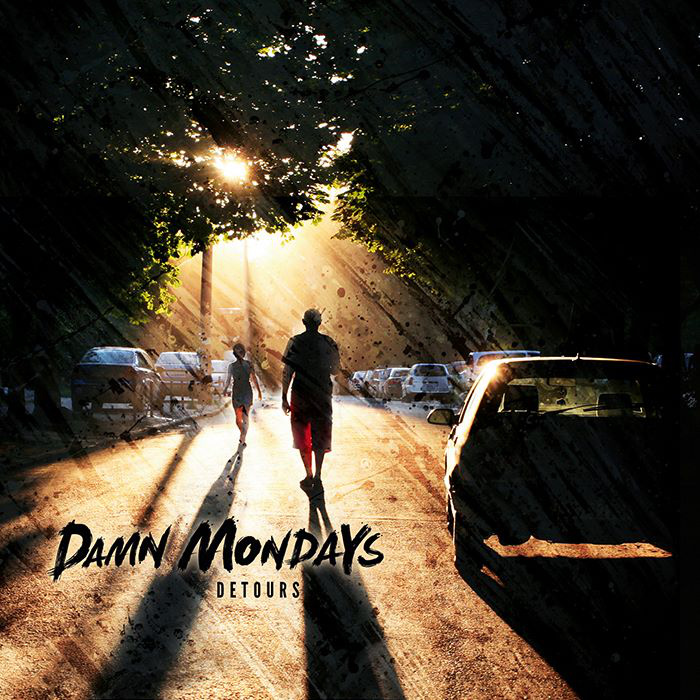
6. DetoursDamn Mondays – 2015

Detours

7. Stranger Just the SameHeel – 2014

Heel-Stranger-Just-The-Same-cover-1

8. Uncontrollable – SingleThe Nixon Rodeo – 2014

10653412_814721398560544_6976840611374292120_n

9. Passengers EPThe Fallen Prodigy – 2015

Passengers - EP

10. Dais EPDais – 2015

Dais EP

11. EgressorThe Body Politic – 2014

Egressor

12. NocturnalIsobel Trigger – 2014

10592676_814720228560661_193589383303874993_n

13. AnchorsThe Wonderlife – 2015

1610946_839959682746495_636616954775477412_n

14. Time and PlaceThe Playbook – 2013

Time and Place

15. Do It Yourself!Count Me Out – 2015

Do It Yourself

16. Change EPBranded Bandits – 2014

a0803732693_16

17. LungeLunge – 2013

Lunge

18. Give It Away EPFelice LaZae – 2014

cover_2_big

19. ContendersContenders – 2015

a3520024415_16

20. The Drake Equation EPHelion Prime – 2015

The Drake Equation EP

The Resurrection of The Hit List — July 6, 2015

When I was running my radio show Underground Takeover, one of the best things I did was run a feature called The Hit List: 10 Demos, Albums, and EP’s You Need to Hear Right Now. Every couple of months I would compile a list of the albums, EP’s and singles that I found myself listening to ad infinitum, and that I figured everyone needed to be aware of and listening to.

When my show ended (it was a college show, after all), The Hit List ended with it. Lately though, so much amazing material has been coming out, these artists really need to be highlighted. So, we’ll resurrect The Hit List for a little while and see how it goes!

Some new details though, to reflect a new incarnation of The Hit List:

  1. Lists will be lengthened from 10 entries to 20.
  2. List items (demos, albums, EP’s, single) appear in no specific order; i.e.: there is no “top” or “bottom” of the list.
  3. I will do my best to attach relevant details to each item, including title, artist, artwork, and year.
  4. I will do my best to keep the list running, and publish a new list as often as possible.
  5. These albums and singles are spread across a variety of platforms, and thus making a straight playlist is currently too time-consuming. However, I’ll reexamine this point over the next few months.
  6. To help distinguish: demo, Single, Album, and EP titles occur in italics, artist names in bold, and years of release in regular font.
  7. Artist names will be linked to either their Facebook, Twitter, home site, or other pages.
  8. This is all for fun, so let’s keep it that way.

So with that, let’s get to it. Here’s my Hit List for July 6, 2015:

  1. Take Me – Single — Pneumatic — 2015

    a0324296281_16
  2. Ephemeral   Remedy X — 2013Ephemeral
  3. The Devil Never Comes — Molly Rhythm — 2015The Devil Never Comes
  4. Passengers EP — The Fallen Prodigy — 2015Passengers - EP
  5. The Steppin Stones — The Steppin Stones — 20154pan1t-1
  6. Fourstory EPA Black Eye Affair — 2015Fourstory EP
  7. Prophet — Florence & Normandie — 2015Prophet
  8. Triangulum Mechanism — Sunshine & Bullets — 2014Triangulum Mechanism 1
  9. Half Blue — Half Blue — 2015a4155327433_16
  10. Sweet Disillusion – Single — Elie & the Engine — 2015Sweet Disillusion - Single
  11. Just the Tip — Big Red Dog — 2015Just the Tip
  12. Girls of the Yukon — The Head — 2013Girls of the Yukon
  13. Demo — Third Season — 2015Demo
  14. Faces of the Sea — Party Asylum — 2014Faces of the Sea
  15. Blur of Our Souls — Heavy Gloom — 2015cover
  16. Distance Between Us — Eat Your Heart Out — 2015Distance Between Us
  17. Miles Away — My Monthly Date — 2015Miles Away
  18. The Drake Equation EP — Helion Prime — 2015The Drake Equation EP
  19. Dais EP — Dais — 2015Dais EP
  20. Unable to Function EP — Vanilla Function — 2015Unable to Function EP

20 Jobs That Would Be Better As Hackers

Because I had 5 minutes of free time today, my mind began to wander. This is the result:

20 Jobs That Would Be Better As Hackers

  1. Lawyer – Argument Hacker
  2. Doctor/Nurse – Body Hacker
  3. Accountant – Tax Hacker
  4. Teacher/Professor – Student Hacker
  5. Mechanic – Car Hacker
  6. Farmer – Garden Hacker
  7. Cher – Food Hacker
  8. Journalist – News Hacker
  9. Personal Trainer – Workout Hacker
  10. Musician – Instrument Hacker
  11. Painter/Visual Artist – Arts & Crafts Hacker
  12. Writer – Word Hacker
  13. Plumber – Pipe Hacker
  14. Real Estate Agent – House Hacker
  15. Veterinarian – Animal Hacker
  16. Actor – Movie Hacker
  17. Pilot/Astronaut – Sky Hacker
  18. Soldier – Battle Hacker
  19. Construction Worker – Scaffold Hacker
  20. Standup Comedian – Laugh Hacker

Apple Disconnects

Originally published on Marx Rand on June 18, 2015.

Sidenotes in the Independent Consciousness

Apple either refuses to, or simply can’t, understand the mentality of a huge growing customer base, that of the independent artist. This is going to present significant challenges going forward, since now that the Internet of Things is beginning to take connective shape, a new sort of revolution is getting underfoot—but without Apple’s involvement being required or wanted. Power breeds knowledge and knowledge breeds power: with the help of the world’s largest value network, the internet, the independents are beginning to have both.

Last week, Apple announced the release of its latest music platform, Apple Music Connect. [1] The product comes on the back of Apple’s shady dealing with independent artists: never mind the fact that the artist which Apple spotlit during the keynote was a manufactured act, it turns out they won’t get any of the precious royalties from Apple for the next three months anyway. [2]  While just 9% of college students say they are willing to shell out for Apple’s new music service, all these things are ultimately sidenotes in the grand picture of the independent consciousness anyway.


Simply an Attempt to Mollify

Apple made headlines recently with the release of its new music service Apple Music during Apple’s Worldwide Developers Conference (WWDC). While the presentation was panned by many for numerous reasons, there was one feature that stoked a range of discussions: Apple Connect.

Connect sat amongst a whole slew of cool new things that Apple announced it was releasing that day. (New, remember, does not carry the same weight in the post-Jobs era as it once did, when it used to be a synonym at Apple product launches for unprecedented).

Connect nonetheless seems like an attempt to mollify artists who have become increasingly disgruntled (which is exactly what I predicted before).

Low streaming royalty rates and complexities with the service in general have become a hot-button issue in the music industry lately, so everyone is presently searching in the dark for the magic potion to lead the blind to the place of worship. (Naturally, in such an environment, most preach what they claim is a slightly more purified version of the same stuff as their competitors have concocted already).

What is amazing is how few people are focusing on how irrelevant Connect will end up being as a tool for independent artists.


“Even unsigned artists” = “You’re still a secondary priority”

“Apple Music will be great for all artists,” the Cupertino, CA.-based one-time music industry disruptor claimed at the launch. Unfortunately, that’s not quite what independent artists heard Apple say.

“Even unsigned artists [will benefit],” was how Eddy Cue,  the senior vice president of Internet Software and Services for Apple, addressed the possibility for independent artists to use Connect. In other words, they were spoken to like second-class customers. Yet again. Cue might as well have intoned:

“You’re irrelevant and pretty much a second priority for us right now while we continue to fight the bigger media war that’s a lot more profitable with the major record labels on that other platform—the one we can’t seem to get off now that’s called iTunes!”

Try and put this in perspective for a minute: these artists are not in a perpetual minority anymore. They are now a rapidly growing segment of the music universe, and are actively looking for a place to creatively collaborate and build to their strengths, despite being ‘left of the dial’. And yet the words coming through the Connect presentation are basically reinforcing this “You’re nothing but an afterthought!” mentality.


The Great Irony

The result of all this is, ironically, that over the long term Apple will come out most shaken of all.

It’s barely days into the product launch of Apple Connect, and there are signs that this is the case already. The technology into which multi-millions of dollars were invested in the form of R&D and product sales and marketing, presently is sitting out there on the high seas, flapping like a half-full galleon with a split in the side of its sail, and no navigational map. The very people that Connect was built to serve Apple is locking out at the first port of entry.

iTunes is a great music library, but what is far too often taken for granted these days is the notion that because Apple disrupted the industry once, it will succeed in doing so again. The reality is that the concept of paying for music is now more elastic and ambiguous than it ever was before, and Apple needs to find a way to adapt. In that sense, the company appears more like Sony did in 1998 than it does any brainchild child of Steve Jobs right now.

Alienating a rapidly growing market segment worldwide is definitely not going to help Apple sail back into the balmy seas of yesteryear.


The New Apple Music Q&A Page

If you go to Apple Music’s information page and read through the questions and answers, two of them immediately stick out. The first of those two questions is:

“How do I get my music on Apple Music?”

Apple’s response is flat and corporate: “you can go through either your label/distributor or one of our approved aggregators.”

Screen Shot 2015-06-12 at 1.11.12 PM

Wow. Let’s take a moment to let that sink in.

Basically what Apple is telling the independent artists––who in a rising number of incidents have professed openly to rejecting major label offers voluntarily––is that they need to be a part of the established label/distributor paradigm in order to even have their music played on Connect.

Then there is the question of users having to submit through Apple’s “approved aggregators.” Apple seems reluctant to admit that increasing numbers of musicians are deliberately foregoing the major record label route (or even any label at all), and it looks here like they are trying to cover their bases a bit thinly by aggregating specific unsigned artists in what will be of a halfway house solution.

But what Apple misses is that when it comes to aggregation, the net result is the same for the artist: less creative control over the product, and more control for the gatekeeper. Anyway, even if there was a way to harmonize this risk, the question still lingers: who are going to be the appointed aggregators? Guys at Apple? Guys at major record labels? Now we’re back to square one.

The second question smacks of exactly this sort of highly-selective, industry buttoned-down approach:

“How can I get access to Apple Music Connect?”

Apple responds by providing a link to a Google News-style verification gate.

Screen Shot 2015-06-12 at 1.11.34 PM

Guess who’s in charge of the admission policy? Ostensibly it’s Apple of course, but it’s not a stretch of the imagination to think that major label brass might have a say in the outcome of who gets picked for Connect and who gets the door slammed in their face.

Now I know that many will say that verification is the only way to keep a service from falling to trolls or being overrun by artists who aren’t really serious. But the reality of it all is that trolls and non-serious artists will get through anyway—that’s just the nature of this business. (For a great example of this, look at all the marketing and spam that gets through Google News’ aggregator every day.)


The Upshot and the Bigger Picture

Apple is clueless about how independents will—or won’t—react to different innovations. They will wonder why they need to be verified, what “verified” even means, and who gets to decide. And why shouldn’t they wonder? They’ve pretty much spent their entire existence in the independent sphere marginalized and pushed aside by the major label dynamic.

The upshot is that if I’m an independent artist, Connect will essentially be the same to me as all the other services out there. What people need to understand is that the established music field of the music industry moves with a different rhythm and flow than the independent universe. Dynamics that are taken as gospel for the former do not necessarily apply to the latter. Independents have their own rules, and you can’t play their game without learning how they work.

But when it comes to Apple, the company is not even trying to do that.


Notes:

[1] The time articles in the piece reflect the original publication date of June 18, 2015.

[2] This policy has since been changed by Apple, while it stood true at the time of the article’s original date of publication.


Thanks to Alyssa Shaffer and Shelley Marx for reading early drafts of this.
YouTube Plays Out of Key

Originally published on Marx Rand on June 11, 2015.

Since being embarrassed after some of the more litigious contracts it makes with independent artists using its platform were made public recently, YouTube is in damage-control mode. The media platform provider has  understandably taken a lot of heat as a result. Right now especially the video streaming service, which was purchased by Google nearly a decade ago for $1.65 billion, is in the process of trying to make nice with the artist community as it braces itself for the onslaught of Apple’s new music service release, Apple Music.

YouTube Has Music, But Isn’t About Music

It’s easy to see why YouTube is concerned about Apple Music. After all, the very same (music) community that in significant measure helped YouTube top $1 billion in revenue last year is just as likely, if not more so, to gravitate towards Apple’s serving of the pie as it is to hang out lapping up mainstream internet TV dinners.

For artists– and especially independent artists – YouTube could be quite a useful tool. At least, what the service is capable of offering should be something that sets YouTube apart from its competitors in the music arena, certainly.

But YouTube is still going to struggle to win in the artist arena for one reason: while YouTube has music, it isn’t about music. For YouTube, despite its cool analytics and humongous user base, is still not a music-centered service. This matters because, at the end of the day, artists are a focus, but not the focus.

With the online music landscape heating up, the services that are able to pay more attention to artists as a principle priority will be able to carve out a significant niche for themselves. In the face of such competition, no one else stands a chance. It’s that simple.

The Percentage Points

A big part of YouTube’s problem when it comes to appealing to independent artists is that it’s a victim of its own success. At the end of the day, YouTube has an overwhelming user-base of consumers (and not just of music, but of all sorts of media) that it needs to keep on satisfying – at last count, there were 23 million subscribers to all the various channels on the service. And that’s only the regular users.

Naturally, it makes sense for YouTube to see that its existing customers are well-catered for, but the reality is that such an approach falls far short of what’s acceptable when it comes to satisfying independent music makers and promoters. They can increasingly afford to be much more selective about what they desire and require from the digital distribution channels that they work with.

To compound YouTube’s difficulties with attracting the independents, YouTube still has in place the same tenuous clauses in the contract that upset the artists just recently. The fact that there are a large portion of artists who are currently unaware of this fact only makes the problem worse over the long run too, for the risk that another public embarrassment for YouTube looms large over the shiny brand image that parent Google has cultivated over the years.

There’s a more fundamental problem than any of this, however, and that’s the following: unlike the teenage makeup artists and tween clothing models that have made gazillions from leading their fans to new cosmetics brands eager to pay top dollar for all the eyeballs, the realistic revenue generated from YouTube for music artists is pretty much zilch when you do the math.

Information Is Beautiful, an analytics service based in the United Kingdom, recently published a breakdown of online revenues obtained by artists across a series of music platforms, namely Bandcamp, CDBaby, iTunes, Spotify, Deezer, and—you guessed it—YouTube. The analytics provider concluded that the percentage of independents able to eek out a minimum wage living on YouTube revenue streams was just 0.07%. Here are the screenshots of the YouTube portion:

Image courtesy of InformationIsBeautiful.com; with edits

Image courtesy of InformationIsBeautiful.com; with edits

Here are the pathetic revenue stream earnings for the signed major label artists:

Image courtesy of InformationIsBeautiful.com; with edits

Image courtesy of InformationIsBeautiful.com; with edits

And now, the revenue stream earnings for the independent artists:

Image courtesy of InformationIsBeautiful.com; with edits

Image courtesy of InformationIsBeautiful.com; with edits

That’s amazing – it’s a seventh of a basis point! In other words, it’s even lower than the cheapest commission charged on an online stock trading platform.

And remember, this is not 0.07% of all one billion dollars of YouTube users, or even 0.07% of all 20-something million YouTube subscribers we are talking about here; it is 0.07% of just all the unsigned artists who receive revenue from YouTube streams! It’s likely you can count that number on the fingers of your left hand while clicking over to the next song with your right.

The Discovery Dynamic

The overriding concern here is that the audience consuming the music of these independent artists is incredibly small. But before you leap to your feet and splutter out the old argument that this is because the music created by independents artists simply “isn’t good enough” or “needs to be curated,” step back and think about the fact that these independents are trying to compete on a platform which is essentially not constructed for them.

Though the dynamic of discovery is big on YouTube, it’s not specified to discovery of new independent artists at all (though it’s great for makeup and clothing brands, which adopts an entirely different sort of discovery process through media). As a result, artists end up competing with an amalgamation of other media – most of which is not music-related – and the poor comparative result they are left with ultimately diminishes any chance that there might have been left over of being properly appreciated or even recognized.

All of this adds up to one very simple reality: inasmuch as YouTube is trying to repair its relationships with artists (and independents among them), it is, at the end of the day, very far from being the be-all, end-all for independent artists that the platform is for other genres of media and entertainment. The fact that less than a tenth of a basis point of artists can eek out a minimum wage using the damn thing – while many other professionals in different walks of life make a lot more than that from five minutes of video stream – attests to this fact.

Thus, for all the potential scale and analytical sophistication that YouTube’s platform offers artists, it is still an ecosystem that is fundamentally unsuitable for them and for displaying what they create. And many of them know it now, too.

Independent Music Is Still  Wild West

The independent music market is very much a wild west, and the introduction of a new tool or a new feature isn’t going to win anyone over. To do that, you need to win the trust and confidence of the independent artists, the way Etsy did with hand-crafters, or even the way that Amazon has managed to do with its dominant share of literary readers and authors alike.

This process is not one in which you can achieve ubiquity by striking a deal with a major corporation which fundamentally only offers enhanced distribution such as a major record label. It’s one in which you need to go straight to the product source – in this case, the artists and their fans – and persuade each of them that what you are providing is somewhere they can interact on a creative level and where the music uncompromisingly always comes first. It should not and cannot be a place where their product looks and feels like an afterthought in the ravenous race to profitability.

The upshot – and the sad irony – of all this is that it’s yet another example of a situation in which one of the very same companies that is so adept at spinning creative mainstream entertainment out into the marketplace proves hopeless in creating a fresh and appealing approach to the rising independent music scene.

As Queen so eloquently put it, “another one gone, and another one gone … and another one bites the dust.”

Spotify’s Sony Contract: What It Means for Everyone

With the leak of Spotify’s contract with Sony last week, there’s a lot of attention on the streaming service right now. I’ll be taking a closer look at that contract over the next week, but for now I’ll focus on the fallout over the last week. In particular there seems to be a lot of renewed interest on the music space, more so than I’ve seen in a while. I think, though, that this has to do with a lot more than simply one contract between two companies; for the first time perhaps, the general public (including music producers, artists, and general music listeners) is aware of the kind of deals being struck behind the scenes.

sony-ve-spotify-ortak-oldu-32936-11022015153944

Even as Spotify soars in newer valuations that have the company somewhere in the $8B range, yesterday’s leak shows that such a valuation may in fact be misleading—Spotify has to cough up around $43M just for licensing from Sony alone. How much do you think they need to cough up for the other two majors, Warner and Universal? Even if we snip off the extra $3-4M, and assume an upfront licensing fee of $40M from Sony—and then simply assume similar prices for Warner and Universal—then Spotify has already spent $120M of investor money. And that’s just for the privilege of having access to the major labels’ stable of artists.

Also, don’t forget that’s before royalties and any other metrics that Spotify has to hit. Therefore it’s more like $43M upfront for the privilege to pay more later on; it’s not a one-and-done purchase. And most unfortunate for Spotify, this latter number is also predicated on how an artist performs in popularity, something they have essentially no control over.

I’m not going to rewrite Micah Singleton‘s article, but I will draw on a number of points he highlighted and what they mean in reality. There are numerous points of importance, but these are the ones I think the general public really needs to be apprised of. Though the contract has since been removed, we got the basic gist:

  1. Written by Sony—First let’s just take a moment to note that the contract was written by Sony. Of course this is their prerogative, but when considering the fact that Sony holds the rights to much of the content that Spotify wants to license, it clearly illustrates who is subject to whom. Frankly, since Sony holds the content rights, they (and the other major labels) essentially hold Spotify’s lifeblood in their hands—that’s not an opinion, it’s a fact. Realistically Spotify is not built around an independent and free model, so they need to play ball with Sony and the other labels, or they won’t play at all. Period.Screen Shot 2015-05-21 at 8.01.23 AM
  2. Advances—Spotify paid Sony $42.5M just for the right to license the music. That’s an upfront fee just to get in the door. This means that anyone looking to compete head to head with Spotify or Rdio needs to magically have about $130M lying around or in funding before they even get their feet wet (projecting the combined upfront licensing fees of the Big Three major labels). One of the reasons that Spotify has to raise such massive funding rounds is because these advances are somewhat annual, and thus need to be renegotiated all the time. And as the major labels continue to get squeezed in their wallets, these numbers are only going to rise for services looking to use major label content.
  3. Screen Shot 2015-05-21 at 2.36.33 PMDivided How and Among Whom?—As Singleton points out, Sony can essentially do whatever they want with that money; there’s no stipulation that it has to be divided in any particular way, or that any of it has to go to artists or songwriters. According to multiple sources, that money usually stays with the label and is generally not shared with artists. This particular point has raised such criticism that its prompted both a response from the EU, which is now looking into Spotify’s contracts, and virtually obliged Sony to come out with a public statement on the matter. Screen Shot 2015-05-21 at 2.36.56 PM
  4. Most Favored Nation Clause—Essentially a clause that guarantees that Spotify’s balls remain in Sony’s vicegrip. The clause guarantees Sony the right to amend  any portion of the contract if it perceives that any other label has a better deal than it does. This means that Sony is essentially never bound to Spotify in any way; it can decide—based on its own perception—that another label has a better deal (which it may or may not) and rework the entire deal for its own benefit. And Spotify has to swallow everything.
    Screen Shot 2015-05-21 at 2.41.24 PMScreen Shot 2015-05-21 at 2.42.20 PMWhere this really kills Spotify is when used in conjunction with the clause dictating payment based on market share. Thus, if another label has a better deal in that regard—perhaps double what Sony is getting monetarily—then Spotify has to cough up and pay Sony the difference.
  5. Spotify’s 15%—Basically exactly what it sounds like. Spotify takes 15% of the revenues from third-party advertising right off the top. What they do with this money is unknown, though it’s quite plausible that they’re not redistributing it to the artists, and are probably giving third-party advertisers a raw-ish deal. Next time Spotify releases a statement saying that they don’t have the funds to pay the artists more money, let’s all remember this little financial tidbit.Screen Shot 2015-05-21 at 2.47.16 PM Screen Shot 2015-05-21 at 2.48.28 PM
  6. Sony’s Ad Spots—This one’s pretty easy to understand: essentially Spotify is obligated to give Sony a certain amount of free ad space on its service. The ad space—which is clearly worth a fair amount of money—is given to Sony at a massive discount.Screen Shot 2015-05-21 at 2.53.33 PMScreen Shot 2015-05-21 at 2.54.09 PMBut that’s not all; Sony retains the right to sell the credited ad space to whomever they want, whenever they want. Again, Spotify gets squeezed.Screen Shot 2015-05-21 at 2.54.41 PM
  7. User Metrics—Spotify essentially has goals it needs to hit in terms of its user metrics (on both payment tiers), and if it misses those, it could be penalized. Conversely, if it exceeds expectations in either of the tier metrics, it recalculates that number so that Sony gets paid more. In English, what this means is that the better Spotify does, the more money Sony is entitled to, but doesn’t necessarily mean that it all works out for the streaming service.Screen Shot 2015-05-21 at 3.07.40 PM Screen Shot 2015-05-21 at 3.07.51 PMIt’s important to remember that Sony isn’t in the business of making sure that it backs up Spotify. It—like the other major labels—is licensing its music to numerous services, so its only real loyalty is to its bottom line. How that affects Spotify is essentially irrelevant to the major label.
  8. The Royalty Distribution (Forget About the Artists)—Without going too deeply into it (Singleton’s initial analysis and infographics are worth consulting), it basically boils down to this: the royalties per stream are so miniscule that you need to be getting millions of streams in order to make any real money (and by real, I mean anything more than $10.00). We all know that independent artists are never going to get to that level trying to compete on an unfair playing field, so let’s just put that point to bed right now. One thing that is worth noting now, though, is that not even every artist has a contract entitling them to royalties. So for all the bluster about royalty payments, many of the artists signed to major labels aren’t even entitled to fair cuts from the streaming.Screen Shot 2015-05-28 at 6.33.02 PMBut even more so, the way in which streaming royalties are calculated is so incredibly convoluted you almost need a degree in economics just to understand it. That’s not how it should be. For independent artists—and even mainstream artists who simply want to understand the financial dynamics—this is yet another way of keeping them in the dark. No one in any other industry would accept some sort of voodoo economics principle when it came to calculating their earnings, so why should music artists—mainstream or independent—have to settle for that? That’s the point, they shouldn’t.

There are numerous other points worth discussing, but these are some of the major ones that discussions of the music industry revolve around. Though arguably a major embarrassment for Sony and Spotify, the leaking of the contract between the two really shines a bright light on what goes on behind the scenes. It clarifies that what happens behind the curtain affects every type of artist, and underscores why more transparency and reform is needed in the music industry. And it highlights something else: the music industry is not dead and foregone. We’re now right on the precipice of a whole new type of music industry that’s taking shape every day. Those who accept and embrace the new dynamics will be the ones who benefit most from them when they inevitably come.


Thanks to Shelley Marx for reading early drafts of this.

Tidal Is Losing More Lifeboats by the Day

Yesterday, TechCrunch ran a piece from Kelli Richards postulating the viability of Tidal as a service, and its likely outcome in the streaming wars. The article was essentially an overview of what’s been going on with Tidal lately, with Richards doing a good job of zeroing in on a couple of things I’ve discussed and underscored in my own mind as the real deal-breakers.

9Gjfg6ks

Before getting into the two main things of her article, I think it’s important to note a very shortbut important—sentence in Richards’ piece: “…the prospects of Tidal upending Spotify in the near future are slim…” This falls right in line with something that I wrote earlier concerning SoundCloud, namely that trying to out-Spotify Spotify is a losing battle and a very poor battle-plan. Going head-to-head with Spotify and playing their game their way (that is, general popular music streaming) is such a poor decision because it means you’re starting way behind the starting line. And in Tidal’s case, this goes double for any sort of exclusive content which might be your main attraction.

Now, Richards’ two main points, and my takeaway from each:

1. Premium/Exclusive Content—Firstly, I’ll be the one to say it: “exclusive content” as one’s main gameplay is a very tough sell. It’s a tough sell because it’s a drastically diminished niche of a larger market, which is basically popular music. That means you’re trying to play on two different levels with two completely different mindsets.

The “exclusive content” play is difficult because it requires your customer base to desire those exclusives almost as much as (or more than) the original content. This isn’t anywhere near the same thing as looking at an independent market, since those content producers are increasingly giving away their material for free (including “exclusives” like remixes, acoustic sets, etc.), and making money elsewhere. For a service like Tidal though, they need to first out-Spotify Spotify to gain the market share of the original popular music demographic, then they need to persuade those people to convert to “exclusive” consumers and pay a whole lot more for something they could just as easily get on YouTube if they wait a couple weeks or a month. This is one of the major flaws in Tidal’s plan in my eyes.

Also under the first point is a small comment included by Richards made by Tidal’s CEO Peter Tonstad, which basically asserts that the industry is moving away from the freemium model, and that “it’s going to be the content richness” which listeners begin to look and pay for. This is bold, but false.

First, the sorts of audiences which Tidal is looking to court—general consumers of popular music—are not about to leave the freemium paradigm anytime soon. Secondly—and funnily enough in my opinion—the rabid, content-rich focus which Tonstad identifies as Tidal’s silver bullet doesn’t really apply to popular consumer audiences on a general level anyway. Ask anyone listening to Spotify if they’d pay double (or anything) for higher quality which they can’t even discern anyway, and I’d be surprised if large numbers converted over. Ironically enough, the rabid thought process which Tonstad is alluding to is alive and well—in the independent music industry—where free plays a much bigger part than it clearly does with Tidal.

2. Celebrity Backers—This point made by Richards is a lot easy to wrap one’s head around; people simply don’t feel so bad when Jay-Z and Kanye West start lecturing about needing more money because, well, they’re rich. And not like “we perceive them as rich but they’re really not;” they actually are rich. Being lectured about money from people like that, then, is not only not welcomed, but it’s really irritating. There’s really no way you can look at that celebrity-backed list of Tidal promoters and take them seriously.

Even more so, though, it really alienates artists who are not rich—you know, like everyone else. For the singer-songwriter playing in dingy clubs, or the band on the road and sleeping in their van, Jay-Z might as well be speaking an alien language. Their thought process is almost indignant (and why shouldn’t it be?); they’re thinking “dude, you have all this money and influence, why the hell do you need any more?” And frankly, if I was still an artist, I’d be thinking the exact same thing. Celebrity-backed things like this are rarely ever a good idea, especially when it alienates others within the same industry.

Richards notes that Tidal has someone who Spotify doesn’t—Taylor Swift—but as I explained here months ago, here’s why Taylor Swift is on the same level as Jay-Z in terms of “not getting it.” She’s so engrossed in the major label paradigm and its trappings that she doesn’t see what life is like for normal artists anymore. And, just like Jay-Z, her disparaging remarks about artists “devaluing their music” strikes a sour and indignant chord in a lot of musicians who think she takes her good fortune for granted.

But if one needs any more convincing of why it’s going to be a very tough road ahead for Tidal, you can read about:

  1. Jay-Z’s hissy-fit onstage
  2. Their firing of their previous CEO, Andy Chen
  3. Criticism from producer Steve Albini
  4. Criticism from other mainstream artists
  5. Their highly criticized and misleading relaunch

The storm isn’t about to end anytime soon, and it seems the lifeboats have left the ship.

Musings on Memorial Day

Both of my grandfathers are veterans. My mom’s father served in Korea, and my dad’s father in WWII. Every Veterans’ and Memorial Day I think about that fact. And I think about the fact that I rarely hear any stories about it.

My dad’s father passed away before I was old enough to remember him—unfortunately what I know of him is concocted through stories from my dad, uncle, and their cousins. The one thing I do know—the one thing my dad says a lot—is that he never really talked much about the war after he got back. Sure he had a few entertaining stories, but he always stuck (I’m told) to a select few. I asked my dad one time about why he thought that was, and his answer was fairly poignant: “I think he saw more over there than he really wanted to remember. I think he had to try and put it to rest.”

My mom’s father—who I’ve been lucky to grow up with—served in Korea, and though he mentions his days in the army sometimes, it’s really not very often. He’s as proud of being a veteran as anyone, but I think the same holds true for him: I think he saw more in the conflict then he really wants to remember or talk about. He’s happy to stick to his stories of funny bunkmates and captains, because that’s where he’s comfortable.

These are the things I think about on days like this; the fact that though many have served (and are currently), what they see isn’t a movie like we experience at home on TV. They see and experience things that we hope never to experience—and which they never want us to. That’s the reason they make the sacrifices they do. So today I think about those sacrifices and appreciate them as much as I possibly can. Memorial Day is fun for pool parties, cookouts, American flags—but it’s also for remembering and honoring those who aren’t here to celebrate with us.

Taking Days to Breathe

There are days that sit in between one’s most productive days; they perch halfway in between relaxation and frustration. They’re relaxing because you find yourself somewhat able to recuperate in your mind, but are frustrating for almost the same reason—you feel lazy, unproductive, distracted. Some of these days aren’t so bad, and you might enjoy the reprieve a bit. And still many of them are terrible because what have you got to show at the end of the counting hours?

These are the days which all creative types loath. You can’t hate them fully because you know in the back of your mind you need to take days to breathe, to recharge and reset. But we hate them nonetheless because our minds are most always on—they never turn off and we like it that way.

It’s hard as a creative type—particularly as a writer—to accept that these stretches of time are necessary. In the end, we simply can’t be on all the time, though we try to fool ourselves into thinking so. We might like to believe that we can forge ahead—push through—on a creative and/or intellectual level, but it’s rarely ever our best work. Many times it’s a placeholder for the better work to come. Sometimes it’s that push-through right after those sorts of days that we are most proud of in our work portfolio.

Take a day to breathe every now and then—the work only really suffers when you burn out completely.