Be Excellent: Even After a 4-Year Hiatus, People Remember You

"Be excellent to each other"

“Be excellent to each other”

Yesterday I received a Facebook message from a guy who I didn’t know. At least, I didn’t think I knew him. I didn’t recognize his name, and couldn’t remember where I would have met him. And then it hit me—I did know him, from years ago!

Perhaps one of the most magical things about Facebook is how it’s enabled people to reconnect with people they haven’t seen in long bouts of time. Yet, inasmuch as reconnecting with old classmates or coworkers is nice and can dredge up all sorts of nostalgic feelings, reconnecting with people you’d even forgotten about is certainly a different kind of trip.

Screenshot of Facebook message from old band contact

Screenshot of Facebook message from old band contact

The guy who messaged me yesterday was someone I’d connected with years ago, and we haven’t spoken since early 2011. At the time, he was a guitarist in a band in the U.K., and I was a hungry new music journalist who’d stumbled across their band page. I’d fallen in love with their garage rock sneer, and written up a short piece on them. We’d exchanged a few messages and gotten to know each other a bit.

And then they went silent (on a hiatus and then breakup, I’m now aware). I moved on and went to college, and frankly forgot about them. Not out of malice, but simply because people get busy with life.

Yet to get this message yesterday from him—telling me he’d taken a break from music for a few years but was now back with a new project, had some demos, would love my opinion on them (was I even in the music industry anymore?)—was as thrilling as our first correspondence. It reminded me of why I love the independent music industry so much. It reminded me of the dynamics that are so magical—that you can go years without speaking to someone, move on with your life, and resume your conversation like no time had passed at all.

"Party on, dudes!"

“Party on, dudes!”

I’m not perfect by any means, but I do my best to take to heart Bill and Ted’s poignant mantra: “Be excellent to each other.” You never know what will come of your relationships with people.

I’ve since listened to his demos and they’re awesome. I’ll be messaging him tonight to see how I can become involved in his new project. This is where the real thrill is in the music industry. At the end of the day, like so many other arenas, it all comes back to the people you meet and the relationships you develop. Everything else is secondary.

Jay-Z’s Tidal “Freestyle” Was Basically a Hissy-Fit

A couple of days ago, during one of his Tidal concerts, Jay-Z went on a rant, and basically laundry-listed a bunch of people whom he felt have been wronging artists in the music industry. He called it a freestyle, but that’s not really what it was. To anyone who’s not a Jay-Z fan (and probably to many who are), it came off as a hissy-fit.

Jay-Z at one of his TIDAL concerts

Jay-Z at one of his TIDAL concerts

It’s not surprise that Jay-Z and company have been having a hard time of it with their new Tidal streaming service. I posted about their launch here, and then followed up with posts on criticism of Tidal from folk band Mumford & Sons, famed producer Steve Albini, and the sudden removal of their (now former) CEO Andy Chen. It’s been a tough couple of months for Tidal, yet instead of putting his head down and working to find a solution to differentiate his music service, Jay-Z thinks it’s a better tactic to antagonize the competition. Though it might make him feel better in the moment, it comes off as petty and juvenile. He looks like a kid throwing a fit for not getting his way.

In his “freestyle,” Jay-Z attacked not only other music services (Google, YouTube, Apple), but called out a few people by name (Jimmy Iovine). Jay-Z asserts that he came into the music game as an independent…which may be true, but that was more than a decade ago, and the musical landscape has changed a hell of a lot since then. The same rich people he’s insulting are his peers—I don’t think he goes home at the end of the night wondering if he’ll make enough money to tour next month.

Frankly, watching him play the victim is getting tiresome. Jay-Z needs to accept the fact that running a music streaming service may in fact be more difficult than he had originally thought. So stop whining about it, put your head down, and work out the problem until you have a solution. That’s how everyone else does it. Getting up on stage and attacking your competitors doesn’t make you a good business person. It make you appear socially and strategically tone-deaf.

Here’s the (mainly) full text from Jay-Z’s rant:

“…So I’m the bad guy now I hear,

because I don’t go with the flow

Don’t ever go with the flow, be the flow…

Pharrell even told me go with the safest bet
Jimmy Iovine on for the safety net
Google dig around a crazy cheque

I feel like YouTube is the biggest culprit
Them niggers pay you a tenth of what you supposed to get

You know niggers die for equal pay right?!?
You know when I work I ain’t your slave right?
You know I ain’t shucking and jiving and high-fiving, and you know this ain’t back in the days right?

…You know I came in this game independent, right?

TIDAL, my own lane, same difference

Oh niggers is skeptical about they own shit
You bought nine iPhones and Steve Jobs is rich…”

Music Startups Are About the Artists, Not the Code

You Can’t Hack the Music Industry in a Weekend

You can’t hack the music industry in a weekend by talking to a few artists and trying to extrapolate from there. This is a mistake I see music startups make all the time, and a reason I think that a lot of them fail. The music business is a much more complex system than I see people give it credit for, and I think this really throws a lot of would-be music startup founders. It’s also very different from the tech industry in a number of important ways, and I think that this also scares people away—making the music business seem like a losing battle, and an inevitable death. But it’s not.

1794554_704025052963513_1083878965_n

Me on my show, Underground Takeover

I wrote here how and why music startups do indeed succeed because of passion, not in spite of it. Unlike other startup industries where an overflow of passion might very well blind founders from the realities of customer desires and industry trends, the music world works on its own axis. It’s much more intricate than is reported on by the press—so much so that I would even argue that many within the established model may have a skewed view of what’s possible and probable. Thus it’s precisely that overflow of passion that leads to one’s desired immersion in the culture, arguably the real key to building a successful music startup.

I recently read a short blog post from a little while ago, wherein the founder of a failed music startup wrote about the problems which were encountered. As I read through it, I noted a number of mistakes which I think should be deeply examined. Let it be noted here, though, that this is not an attack on the author, nor is it meant to call anyone out; as such, I will steer clear of any terminology (including specific pronouns) that might reveal the author or their failed company. Let’s begin.

The Realities

1. A Few Conversations Aren’t Enough

In most startup industries, talking to your customer base is key, and fast iteration is the name of the game.

But music is different. Music is different because people seem to forget that it’s an industry that can’t be understood by reading a few articles on Wikipedia or having conversations with a few artists.

Who are these artists? Where are they from? How big is their fanbase? How rabid is their fanbase? How many albums or EP’s have they released? Are they teetering on the point of break up, or are they solid? Do they tour or don’t they? These are just a few questions you need to ask yourself before relying on the feedback given to you. It helps qualify the types of answers you get. Different types of artists think different types of ideas are “cool” (which means nothing until you qualify that word as well), and without understanding where in the ecosystem these artists exist, such feedback is essentially useless.

Screen Shot 2015-05-11 at 2.44.55 PM

Never stop talking to artists.

That was the author’s first mistake. The second one was much more egregious. Never ever stop talking to the artists. If you stop talking to them, you’re dead. Period. The music landscape changes every day, much faster than a lot of other companies, even within the context of tech. The artist who was nobody yesterday is a national name tomorrow. If you stop talking to artists and stop putting your name out there, you become irrelevant so fast it’s not funny.

This is not an industry where you can have some conversations, gather feedback, go back and recode something, then collect more feedback. You need to find a way to be coding and strengthening your reputation among artists simultaneously. The artists don’t care about your iteration cycle; the only thing that they understand and connect with is your passion and their voice through you.

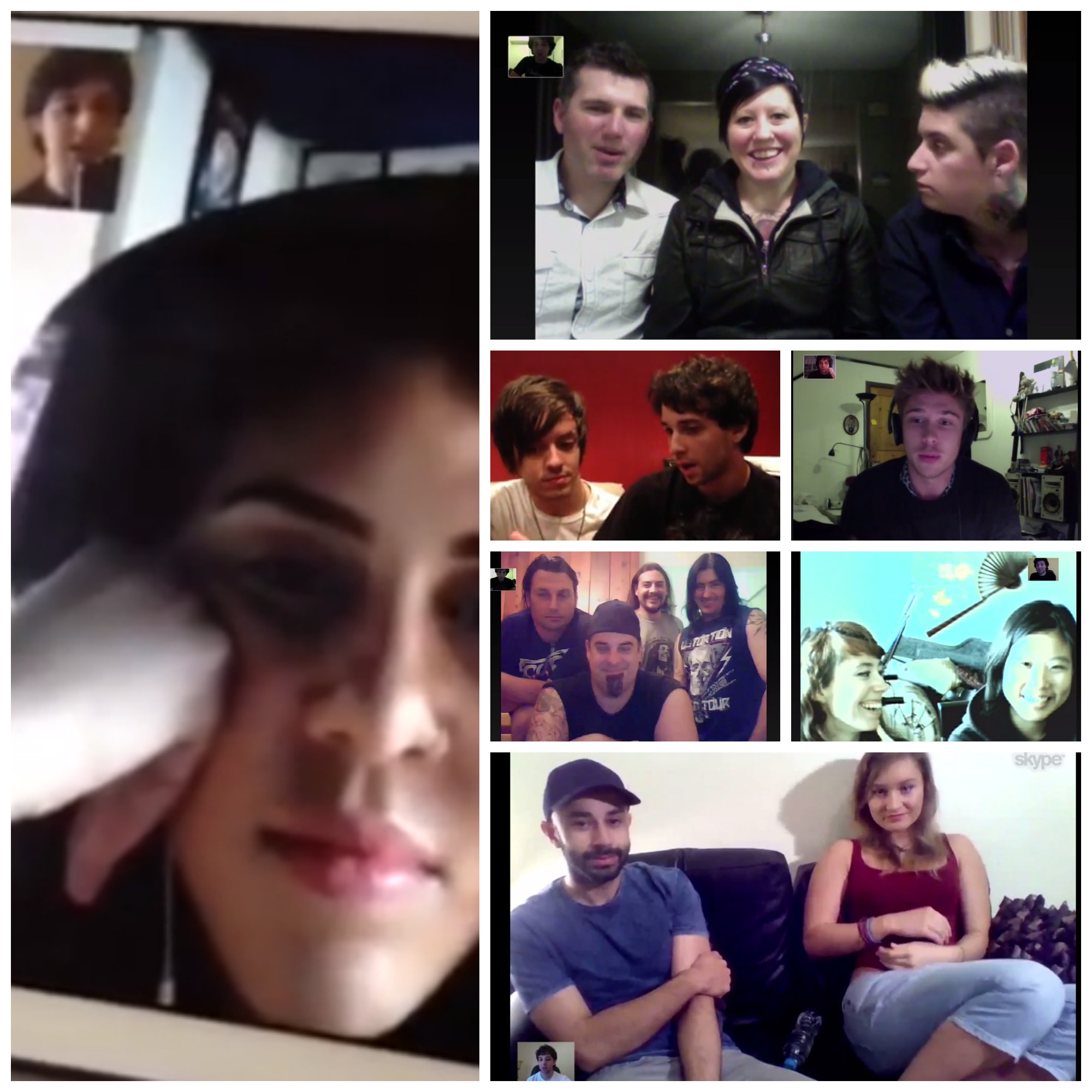
Me interviewing (clockwise): Felice LaZae, Alabaster, Christopher Linden (Neverblue), Me vs. Gravity, Isobel Trigger, Diamond Eye, and Heel

Me interviewing: Felice LaZae (left), Alabaster (top), Christopher Lindén (Neverblue) (mid, top-right), Me vs. Gravity (mid, top-left), Isobel Trigger (mid, bottom-right), Diamond Eye (mid, bottom-left), and Heel (bottom)

2. Music Isn’t Neatly Splintered Like Other Industries

In the music industry, the first thing to understand is that things aren’t as splintered and unbundled as they are in other fields. In other arenas, being an expert in data analytics or e-commerce sales might very well be enough of a foundation on which to build a company. But in music, understanding only one aspect means not understanding all of them. This is where the author failed (or rather, misunderstood) in this respect.

Screen Shot 2015-05-11 at 2.44.07 PM

Music isn’t neatly splintered.

“Sales” in the music business can mean different things to different people; it could mean sales of tickets, merchandise, music files, special gifts, etc. And it could mean understanding those sales from the point of view of an artist, fan, promoter, venue, etc. Thus to say that one isn’t a “music sales domain expert” essentially means that one doesn’t understand that there are a very many different types of music sales domain experts, and that they are all very intricately interconnected in different ways. In approaching a music startup with this skewed notion of understanding, I believe the author began on a misleadingly difficult path to come back from.

3. Never Keep Anything from the Artists.

Understand that this is an industry where artists and people are used to being taken advantage of. That’s the norm. For many artists, industry experience has taught them to be wary, and anyone who is familiar with the dynamics of the industry can understand why. Sexual harassment, broken promises, money troubles, and limited access to resources are just a couple of things that plague artists daily.

The music industry is full of all kinds of realities that music consumers rarely see, and even more rarely care about: breakups, bad blood, intra-band politics, collaborations, no money, live touring, ridiculous royalties payments, new releases, band tragedies, sleazy industry “professionals,” loyalty to particular people—these are all things that music startup founders should understand way before writing any code. If not, you’re doing it ass-backwards.

The meaning of this is very simple: if you keep secrets from or mislead the artists you want to work with, you’re dead. Done. Finished.

Screen Shot 2015-05-11 at 2.45.52 PM

If you mislead or keep secrets, you’re dead.

The author did the company a massive disservice by misleading an artist they were working with. Artists are not VC’s; they don’t give a shit if your product is subpar and you need to pull it back, if you’ve missed multiple ship dates, or even if the damn thing works right the first six times they try it. They don’t care. The only thing they really care about is not feeling taken advantage of. If you’re honest and up front, you’re golden, no matter how many ship dates you’ve missed. Their deepest loyalties (most artists, anyway) are to people who they perceive as supporting them the way their fans do. This is where you need to be speaking with passion, not tech logistics.

The music industry is very much like the tech industry when it comes to interconnectedness; everyone knows everyone. They tour together, play together, promote each other, and rely on each other to steer clear of sleazy people. Keeping secrets and misleading artists is one of the sure-fire ways to quickly find yourself a pariah in the music community. (And no, genre doesn’t matter. People talk, and word gets around. It doesn’t matter if you’re dealing with rappers or heavy metal bands, a bad reputation is a bad reputation).

4. Free Is Ubiquitous. Live With It.

Free is ubiquitous in the music industry. No matter how much people might try and fight it, it’s a big part of the future. Period. Fighting the free dynamic will only give you headaches and lead you faster toward the deadpool.

Screen Shot 2015-05-11 at 2.46.37 PM

Free is here to stay, live with it.

If your company can’t exist in a very competitive way within the free paradigm, you’re fighting a losing war. And no, royalties aren’t going to save anyone, so don’t believe that they will.

The fact of the matter is, many artists embrace free. They see it for all its benefits. Again, this has to do with understanding the differences between different types of artists. If you can’t even make those distinctions, then trying to understand this whole point is useless and thus irrelevant.

5. Artists Tend to Be Open-Minded By Nature

The reality of it is, many artists tend to be open-minded by nature. These are not engineers focused on the logistics of how realistic something is. They don’t care about market-cap, valuations, competition, or which programming language will run the best.

This is the music industry, it’s inherently filled with dreamers. These aren’t people who care which classes you took in college, or how many programming languages you know. They are perfectly happy to tour the country in a crappy van, and hang all their hopes on the notion that they might be able to make a living playing music. And there are a lot of them.

Me with: Those Mockingbirds (top left), Bloody Diamonds (top right), The Steppin Stones (bottom left), Sunshine & Bullets (bottom left)

Me with: Those Mockingbirds (top left), Bloody Diamonds (top right), The Steppin Stones (bottom left), Sunshine & Bullets (bottom right)

This means that if your ratio of yes:no doesn’t skew heavily towards yes (like 80-85%), you are doing something very, very wrong. In an industry where the content producers are dying to try new avenues every single day, if you don’t at least capture the attention of 8/10 with your pitch, you have a real problem.

Screen Shot 2015-05-11 at 2.47.05 PM

If you don’t capture around 8/10, you’re doing something wrong.

Again, these are people who live on passion, and are not super bothered by logistics. If you put out a soft beta and it doesn’t load the first six times for an artist, no big deal. As long as they really believe in your vision, they will keep coming back. Period. And they will wait as long as they need to.

(In fact, if you’re not getting emails from artists apologizing for not signing up for your beta fast enough, you’re doing it wrong. This actually happens, and if your inbox isn’t full of apologies for delayed responses, you haven’t gotten through to your key demographic. I actually have emails sitting in my inbox from artists apologizing to me for not signing up for a small test fast enough, hoping that they haven’t lost their spots).

6. Artists Don’t Care About Your Software

Artists are not engineers. They don’t give a shit about your software. None. Zero. Zilch. They don’t care if it’s written in Ruby or Python. They don’t care how many iterations it’s gone through. Many times, unless they’re programmers themselves, they won’t understand what makes your software unique or special. And frankly, they don’t care to understand.

Screen Shot 2015-05-11 at 2.48.41 PM

Artists don’t care about your software. Period.

Artists care about what the software will let them do. What kinds of doors will it open for them, and how many of their fans will they be able to reach through those doors? Is your software just like SoundCloud’s or Spotify’s? Doesn’t matter. The only thing that matters is their understanding of what the core dynamic is that the software is attempting to solve. This understanding is again distilled down to passion.

Most every artist I know—whether they’re from the U.S., Canada, Europe, or Australia— doesn’t give a shit how good your playlist-making algorithm is. It isn’t aimed at helping them, so they don’t care. If that’s your pitch, you should really reexamine your status.

This is where the author made a major error. There wasn’t a clear argument made for how this startup’s software would augment the passion dynamic of the artist. How would it affect the passion of the his fanbase? Would it give the him more dynamic tools to address the passions of the fans with regard to his music? Clearly there wasn’t enough of a distinction to dissuade him from using another platform.

This actually brings up another important point: if your music startup is so threatened by the existence of other music platforms that they can’t be used in conjunction, you have a major problem. The music landscape is populated by numerous services, platforms, apps, and companies. If you need to unseat one or more of these to be successful, go home and redesign your company.

7. You Need to Speak Their Language

All of this culminates in one singular, important point: you need to speak their language. Artists are like engineers, bankers, lawyers, doctors, or journalists in that they have their own language; their own buzzwords (both good and bad), their own tone, diction, emphasis, and colloquialisms. If you don’t know or understand these, you’re out of luck. No amount of good programming will make the difference if you can’t sell it to the artists.

Me in Dublin, Ireland with Chris ____from the Riot Tapes

Me in Dublin, Ireland with Chris O’Brien from the Riot Tapes

If you want to be a music startup founder, you better have at least a few years’ experience in actually talking to artists. Understand that conversations between you and the artists, and you and the music fans will be very, very different. Do not speak to artists the way you would to music consumers. They are not the same as music consumers, and if you treat them as such, you label yourself as someone who can’t distinguish between the two.

If you don’t have a cofounder on your team to translate the tech speak into artist language, you will have a very, very hard time. There’s no substitute. Being comfortable talking to other startup engineers or investors means very little in this respect, except for knowing how to put words together in a sentence. Other than that, you’re speaking a completely different language than the artists you’re most likely talking to. Artists are not engineers, so assuming that they are will kill you.

Me interviewing Cherri Bomb (now Hey Violet) from Amsterdam, Netherlands

Me interviewing Cherri Bomb (now Hey Violet) from Amsterdam, Netherlands

To artists, metrics rarely, if ever, speak as loudly as passion. The passion is what comes across first and last. Most everything else sandwiched in between is somewhat secondary. If you’re a founder of a music startup, accept the fact that you’re going to be speaking to artists and music industry professionals (promoters, venues, organizers, merchandisers, etc.) a hell of a lot more than you’re going to be talking to your music consumers. And if you’re working in the major label paradigm, get used to talking to major labels (that means lots of lawyers and executives). All of these people have different dialects of the same language. This doesn’t mean that the music industry is impossible to crack for new music tech startups. It just means that if you’ve never been in the industry before, you’re starting very far behind the line.

 You Need to Live This Passion

In the end, what this all means is that being a music startup founder has to come from a deep-seated passion. It has to almost be a nagging need that you wake up with. It’s not a one-and-done scenario, where if your first crack as a music startup doesn’t work you move on. If that’s the case, you don’t care enough—you don’t love it enough. You need to live this kind of passion. From how you dress to the slang you use, the little things matter, even if they shouldn’t. And trust me, the artists notice. It becomes an “us/them” mentality. You’re either with the artists—you know them, you understand them— or you’re not. There’s rarely a middle ground.

Me at Warped Tour 2012, with: June Divided (left), The Nearly Deads (middle), Might Mongo (right)

Me at Warped Tour 2012, with: June Divided (left), The Nearly Deads (middle), Mighty Mongo (right)

In the music industry, if you’re an artist and don’t use every tool at your disposal to try and grow a fanbase, you simply don’t care enough. That sounds callous, but it’s true. The same is true for music startups—the only thing that will really get you through to the other side is your passion. You need to breathe the relationships with your artists; you need to be friends with them on Facebook, know them by their first names, know their birthdays, why they started playing music, what their ambitions are—everything short of how they take their coffee, and maybe even that.

Your Code Can Wait—They Can’t

All of this information comes from conversations that never stop. If you stop messaging an artist because you’re busy fundraising, sorry, you’re dead. If you can’t be bothered to respond to their emails because you’re too busy fixing you’re code, sorry, they don’t care, you’re finished. Your code can wait—they can’t and they won’t.

Ironically, this is what I find the most invigorating about being a music startup founder. I love talking to the artists and contacts—I thrive on it. I’ll respond to Facebook messages from artists in Canada, Denmark, Ireland, or California at 4 AM. And I do it because I love it. If you’d rather be writing code at 4 AM than talking to artists in New York or Germany, don’t do a music startup. Do something else that’s not people-based. Because in the end, you can’t hack your way into personal relationships. These relationships take time and care—they don’t happen on your schedule just because you’re trying to code your next app update.

But the flip-side is also true. If you have them going in, you’re lightyears ahead. You have a built-in base that’s invaluable. That’s how you really need to build a music startup: based on the relationships you develop with the artists. Everything else flows from that.
Back to Equilibrium

Today was a slow day. After the three-day whirlwind that was TechCrunch Disrupt in New York, even those of us who streamed at home felt like we need a day to recuperate. After sitting (relatively) glued to my computer for the past few days (to watch the live stream as well as participate in the conversations), I was happy to “take today off” and let my mind wind down somewhat.

And yet, even as I forced myself to take a break today, I still found it unnerving to not at least look at the tech and music news. Though not a feeling as heavy as displacement, it seems that coming off the tail-end of a highly charged and intensive conference like TCDisrupt has a tiring effect. A “duh” statement in and of itself, it nonetheless is important to keep in mind that we’re human, and simply can’t keep our brain’s on 100% of the time. So what feels like being unfocused is actually a way of rediscovering an equilibrium that was recently out of balance. I’ll feel more focused after the weekend I’m sure. After all, a little rest never hurt anybody.

SoundCloud’s New NMPA Deal Is Irrelevant for Independents

News broke today that SoundCloud has reached a deal with the National Music Publishers’ Association (NMPA) to secure publishing rights for the artists who use the service as a content publishing site. In the byline of the piece is the notation that as a result of the deal, independent publishers will now be able to receive royalties from their content one the service. Yet while the news sounds groundbreaking as a headline, it nonetheless fails to address the problem that I identified earlier—namely, that SoundCloud is fast becoming an obsolete option for independents.

The NMPA and SoundCloud logos

The NMPA and SoundCloud logos

As the streaming service has worked hard to monetize in the last few years, it has begun a move away from the independent arena in which it started. On the heels of a licensing deal with Warner Music Group (attained last November), SC has been attempting to lock up similar deals with Universal and Sony as the major labels try (but fail) to reestablish their dominance in the musical landscape. Yet despite the fact that only Warner has signed on for now (not really a good sign for SoundCloud’s major label ambitions), it’s still clear that SC’s priorities are shifting in favor of a major label paradigm.

Major Label Percentage Ownerships of (some) Streaming Services

Major Label Percentage Ownerships of (some) Streaming Services

As a result, the news of SoundCloud’s deal with the NMPA today is essentially irrelevant for independents because it doesn’t address the real problem of independent artists: the problem of competition and exposure. Inasmuch as the deal sounds good for independent publishers, it’s unlikely that it will give them any edge over their major label counterparts. Actually that’s a misleading statement—the major label publishes already have a massive edge over the independents, so what this deal will really fail to do is make the two equal.

NMPA CEO David Israelite is quoted as saying, “This agreement ensures that when SoundCloud succeeds financially, so do the songwriters whose content draws [users to the site].” However, I feel that though Israelite’s intentions are good, his notions of the dynamics below the surface are misguided. The royalties that independent artists and publishers will supposedly earn exist essentially in theory, and this doesn’t even take into account the minuscule amounts of each royalty payment.

What the major label industry really looks like; The Big Three

What the major label industry really looks like; The Big Three

In the end, the royalties “earned by the independent publishers” are essentially nondescript because in order for any real money to be made through royalties, the artist is required to have a massively large and engaged fanbase to drive those royalty-dyanmics. Independents by nature rarely (but not never) have these sorts of powers behind them. Thus the resultant playing field is still the same: the major label artists (and labels) more or less control the spotlight while the independents are left in the large swaths of shadow. This is a good publicity piece for SoundCloud; but for the independent artists and publishers, it’s more or less irrelevant in the grand scheme.

Exhibiting One’s Creative Pieces

Today was day 2 of TechCrunch Disrupt in New York, but what really excited me today was the announcement by a friend of mine that she’s starting a small arts and writing publication. As much as I enjoyed watching TCDisrupt today, it was almost overshadowed in a sense by getting that message in my inbox. I’m still incredibly attached to my writing (as one can tell) and my art, and the chance to present it publicly (however minor) thrills me beyond measure. I suppose that’s part of identifying as an artist: any possibility of an exhibition of your work immediately takes on a whole new exciting tone when one considers it as a viable possibility.

Delusions of grandeur aside, the thrill that comes from doing a small art exhibition, or seeing a piece of yours published somewhere other than your own blog, is something that we creatives live for. In the end, it’s not about being the next great whatever; it’s about creating something and knowing that someone somewhere will see it. That dynamic of produce and consume is innate in all creative souls, and something which drives us every morning to make something new. For me, I’ll be looking into my portfolio soon to see which pieces I’d like to send her first.

Music Startups Succeed Because of Passion, Not in Spite of It

The Lead-up

Full disclosure: I am a music startup founder. 

Right now my earbuds are in, and my music is turned up so loud I can feel my spine shaking. Not because I’m angry or sad, but because I’m determined. I’m determined to put to rest the jaded notions that surround music startups, even if it takes me more than one post to do it.

I read an article on Medium today that postulated that part of the problem with music-tech startups is the passion which those music-tech founders have for their products or services. The piece concluded with this sentence: “Passion is great, but in the end, it often fades.” False.

The article, though written I’m sure with the best of intentions at shining a light on the challenges of music startups in the tech arena, is fraught with generalizations and assumptions, none of which are good to have for an objective point of view. The piece referenced a talk from Google User Experience Researcher Tomer Sharon, using it to bolster the premise that “music startups go at it about all wrong” (of course I’m taking some creative license here, but that seems to me to be the basic paraphrase of the piece).

In his talk which the piece points to, are six main points about executing the wrong plan, and how this dynamic seems to plague numerous founders. By the author’s own admission, the talk wasn’t music startup-focused, and the resulting analysis is just a serious of personal views. The application of these points to the large deadpool of failed music startups is understandable. After all it makes sense to look at a slew of failed projects and calculate the correlation and causation of their respective deaths. However, the piece takes too much latitude in my opinion, and shines a shadow on all future music startups for the sake of bolstering a (misleading) argument in the present.

Statement admitting most everything that follows is personal opinion.

Statement admitting most everything that follows is personal opinion.

The (Asserted) Problems and the Responses

Here are my responses to the six points in the talk, and subsequently in the article (the asserted points are paraphrased for the sake of simplicity:

Asserted Problem #1. Founders assume that their personal struggles are mirrored by a larger struggle that the world needs a remedy for (which the author admitted is something that does happen). Further, most people don’t care as much about music; most everyone besides you and your music friends is essentially a casual listener, and thus an insignificant statistic and/or demographic.

Statement asserting that mostly no one cares about music.

Statement asserting that mostly no one cares about music.

Response #1. In many areas, and in music as well, there are problems that avid fans/users identify that other, “more casual users/listeners,” might not identify until they can see an improvement (the proverbial before and after picture). Not every identification of a problem can or needs to come from a “casual” user. Sometimes it takes a trained and experienced eye to understand and be able to identify something as broken and to be able to innovate a way to fix it.

This has nothing to do with the passion that music startup founders have for music. It has to do with their ability to dissect an industry that they have come to know better than most, and be able to see room for innovation within it. The generalized statement that “most people don’t care as much about music as you do” is misleadingly false.

It first assumes that one (the founder) cares too much about music, or is in same way too in love with music so as not to be able to strategize accordingly. Secondly, it presumes to know what the music founder has in mind for an innovation, and already moves to the assumption that such an innovation will fail. And lastly, it presumes to generalize peoples’ unique affections for music without citing any real statistical proof.

People do care about music—in fact they care a lot. That’s the reason that Napster was such a snafu in 2000, and the reason that the music space will be the next crowded arena as numerous companies try to cut a niche in the space. People do care, though with each person at a varying degree, how can one possibly know that “most people don’t care as much as you do[?]”

Asserted Problem #2. Startup founders seek validation from friends and family, who tend to be biased.

Response #2. This is a problem that all startups face, not just music startups. The piece’s assertion that founders of a music startup essentially only congregate with similarly “music obsessed” individuals presumes to know the particular group dynamics of every music startup founder.

Statement asserting that "music people only congregate and seek feedback from other music people."

Statement asserting that “music people only congregate and seek feedback from other music people.”

I am a music startup founder, but my social circles are filled with people who populate the music, tech, theater, science, medical, and legal fields. Therefore, to reduce my social circles down to individuals who “think like I do” is fairly pandering and presumptuous.

Asserted Problem #3. Listening to users rather than observing their behavior can lead to disaster, as it can lead to building something people say they want, as opposed to something they will actually use.

Response #3. Much like point #2, this is a conundrum that plagues all startups, not simply music-related ones. Therefore, it should be relegated to the list of startup mistakes to avoid, not used as a reason to forego building a music startup.

The author’s use of the company Jukely as a buttress for the argument actually brings into question the author’s own view of the music industry. The analysis is filled with wild generalizations like “[t]he live music audience [is mostly] made up of people in their twenties” and that “many people [can’t stay out late and see music because] they have a career and kids to think about.”

Statement asserting that the only relevant music-goers are in their twenties.

Statement asserting that the only relevant music-goers are in their twenties.

Statement presuming to know the career and family dynamics of music-goers.

Statement presuming to know the career and family dynamics of music-goers.

The former is false because it’s a gross generalization (and assumption, for that matter), of the age-range of all music-goers everywhere, failing to take into account different music scenes, tastes, geographical dynamics, or any number of other factors. The latter is negated (and thereby false) because it presumes to know the intra-familial and career dynamics, realities, and responsibilities of all music-goers everywhere. As a result, the whole analysis can’t be put forward in any sort of objective way, and must therefore be taken as a matter of opinion, not a matter of fact.

Asserted Problem #4.  Most music startups don’t test their riskiest assumptions.

Response #4. This entire point negates itself because it purports to know every assumption that every music startup has, and every failure that came as result of ignoring those assumptions. Again, gross over-generalization is the culprit here.

In the midst of arguing point #4, the author makes a bold statement that I can personally bear witness to as wholly false. The author writes: “The other risk startups take when entering the music space is that they simply don’t know anything about the music business.” I am a music startup founder, and I have spent nearly a decade in the music industry.

Statement asserting that music startup founders know nothing about the music industry.

Statement asserting that music startup founders know nothing about the music industry.

Though the author does make a good point—that the “launch first, ask questions later” approach isn’t suited well to the music industry—the point is negated by the assumption that all music startup founders are simply overzealous music fans with no understanding of the inner workings of the music business. I for one take offense to that.

I was in a band in high school, and after graduating, took a gap year before college, during which I was a music journalist. I continued my journalism well into my college career, even as I simultaneously ran a radio show and conversed with artists daily. In fact, I had press access at Warped Tour in 2012 precisely because of the connections I’d made and things I’d learned during my tenure as a journalist and DJ. All of these experiences and understanding are what I draw on every day to help formulate the best decisions for my music startup.

Me on my show, Underground Takeover

Me on my show, Underground Takeover

Me with: Those Mockingbirds (top left), Bloody Diamonds (top right), The Steppin Stones (bottom left), Sunshine & Bullets (bottom left)

Me with: Those Mockingbirds (top left), Bloody Diamonds (top right), The Steppin Stones (bottom left), and Sunshine & Bullets (bottom right)

Me at Warped Tour 2012, with: June Divided (left), The Nearly Deads (middle), Might Mongo (right)

Me at Warped Tour 2012, with: June Divided (left), The Nearly Deads (middle), and Mighty Mongo (right)

Asserted Problem #5. Music startup founders become obsessed with can I build it, and lose sight of should I build it.

Response #5. Again, this is a problem that all startups must contend with. It seems that the author takes the most general points of avoidance made to most and/or all startups and sets them up as tools to bolster an argument that takes aim at music startups specifically. But in reality, if these are simply more general avoidances (seeing a pattern here?), then they have no place in this argument anyway, and are thus negated by their own generalization.

Asserted Problem/Response #6. The author actually doesn’t actually make a point #6. I assume it was meant to be taken or gleaned from the concluding paragraphs, but all that is left at the end of the piece is more generalizing. Statements like “[t]he music tech business is a graveyard littered with startups that seem cool at the time, [but no one wants or needs]” and “[the music founders] all went to SXSW, and lit some money, and crashed and burned a few years later” are more presumptuous than perhaps anything else in the piece.

Screen Shot 2015-04-30 at 8.14.56 PM

Statement asserting that music startup founders just go to SXSW and build companies no one wants.

The former of the statements asserts that no music founder could ever possibly create a music app or service people want/need, and the latter elevates SXSW to the pinnacle of godhood in the realm of music festivals. Yet if the author was familiar with the trends and grumblings that go on below the surface, then it would be understood that SXSW has in fact become sour to many independent music fans in recent years, as it leans further towards a mainstream agenda.

The last paragraph in particular is annoyingly pandering; its tone and diction betray a bitter and jaded writer using generalizations to bolster arguments of arrogance and assumptions.

The Last, False Sentence

Which brings us back to the last sentence yet again: “Passion is great, but in the end, it often fades.” Clearly the author is surrounded by other jaded personalities who forgot (or perhaps never knew) why most people get into the music business in the first place. It’s not about being the next Led Zeppelin or being rich and famous (though it’s fun to entertain fantasies); it’s because our passion is visceral—a part of us that we can’t turn off and on at will. It just exists as a nagging need, like the need to breathe when we wake up in the morning.

Passion can transform or ebb, but it rarely fades in the way that the author asserts it does. In the end, many of us in the music industry chose this business not because we wanted to solve some major problem (not at first); we chose it because it speaks to us in a way few other things do. That passion doesn’t fade. If anything, it gets stronger with every subsequent experience.

Artists Live On

It always sucks when bands break up and artists move on to new projects. As music fans, we find ourselves so drawn to some artists because they speak to us on such deep levels. We them as extensions of ourselves, which makes their breakups all the more palpable and disappointing.

It’s an unfortunate reality of being in the music business that I’ve experienced this more times than I care to count. Many nights a band will come on my playlist, and I’ll find myself thinking, “damn, if only they were still putting out new material.” It’s a yearning for more of something that you love, and a deep desire to see what other creative heights they’re capable of reaching.

And yet, through others, these artists live on. I went to an event tonight at my brother’s high school, and found myself talking to a couple of his friends who shared my music taste. When I asked one of them if she’d ever heard of a few particular bands, she told me no, but that she’d be interested in hearing them. Later, after I got home, I had my brother send her a link to this band’s music video from a few years ago. According to my brother, she loves it and is asking how she can get her hands on the full album.

Things like that remind me every day why I continue to do this, even when some of my favorite artists break up and move on to new things. There is always a new audience, up and coming, curious and hungry for something they’ve never heard before. That sort of curiosity and enthusiasm is one of the reasons I love this industry so much. This music never dies. It continues to play and reach new people every day, who are eager to hear it, and pass it on. Introducing someone to something they’ve never experienced before, and see their eager grasp for it—there’s no thrill like that. Man, what a rush.

The Major Labels Are Not Reestablishing Their Dominance

The Misleading Statement

A couple weeks ago, Forbes ran an article detailing how the major record labels were taking their “revenge” on the current landscape by making “strategic partnerships” with music services to reestablish their dominance. This was a very bold statement. Here’s why it’s misleading, and essentially false.

The major record labels (the Big Three, Warner Music Group, Universal Music Group, and Sony) are indeed striking deals with music services like Spotify, Rdio, and SoundCloud, but these deals don’t signal what the article asserts that they do. The reality is that the majority of the label-service partnerships revolve around licensing rights and royalty payments, an already broken system that will continue to feel squeezing pressure as we move further into the digital age.

(click photo for larger preview)

What the major label industry really looks like; The Big Three

What the major label industry really looks like; The Big Three

The article focused on the labels’ calculated move to reassert their control as gatekeepers by using their access to artist content as a leveraging technique. This is true, and is completely expected; the labels are doing what they can to hold onto what power they have left. But the reality of the situation is that this isn’t a new move; it’s a rehashing of the same dynamics that the labels have relied on for years. This is exactly why they’re not “taking revenge” on anything or anyone.

The Ironic Voodoo of Ignoring the Middle

As much as they would like to believe they still hold the power they once did, the major labels need to acknowledge that their ability to deem music as “good” or “sellable” is essentially irrelevant in the grand scheme now. It’s lost a certain sheen of relevance because they’re no longer the only deciding force out there to dictate the music the gets made or played. Now, the power of choice and reach comes to and from anyone with an internet hookup and a laptop. Ergo, though they may try to deny it, the major labels are gatekeepers no more.

So here’s where the ironic voodoo comes in: major music streaming services like Spotify and Rdio sign licensing deals with the major labels because they think that’s the only way to survive in the music landscape, and the major labels license their music because they essentially see no alternatives at the moment. Simultaneously though, both sides ignore those artists who fall in the middle: the independents (who, by the way, make up a massively growing market). Thus they are dismissing today’s independent artists who might be major underground sensations tomorrow. SoundCloud used to be a happy place for the independents. Then even that changed when they signed a deal with Warner and began seeking out deals with the other major labels.

The Punch: The Percentage Dynamics People Ignore

I wrote here why independent artists will eventually begin to move away from SoundCloud. What I didn’t focus on at the time, and precisely what the Forbes article glazed over, are the percentages of these streaming companies that are owned by the major labels. Beyond my argument regarding SC and Warner, the Forbes article noted that Warner owns 5% of SoundCloud, which it acquired in the streaming service’s latest funding round (and also which it acquired at about a 50% discount from what other investors paid).

That’s not all though; all of the Big Three collectively own about 10-20% of other streaming services, such as Spotify and Rdio, as well, and Universal jumped on a 13% stake in Beats before Apple snapped them up. (And this doesn’t take into account all the “360 deals” that are taking place).

Thus, we have the major labels, who control the licensing that these streaming services depend on, owning parts of the streaming services themselves. Essentially they can bully the services into driving towards what’s best for their artists with the power to pull their licensing from said services if they don’t comply, thereby draining them of their lifeblood. Doesn’t sound like a pyramid scheme to me at all… Oh wait, yes it does.

(click photo for larger preview)

Major Label Percentage Ownerships of (some) Streaming Services

Major Label Percentage Ownerships of (some) Streaming Services

Here’s what it means in the bigger picture: the major labels are gobbling up these stakes to preserve their roles as the gatekeepers of the musical landscape, and to possibly make a grab at the distribution arm for their music. Despite the fact that this is working for them for the moment, it most certainly does not mean that they’re reestablishing their dominance over the music landscape. This matters for two main reasons:

  1. It underscores the reality that the labels aren’t really coming up with any new tricks; they’re just rehashing the same ones again.
  2. It proves that assertions of “equal opportunity” for independent artists on streaming services like Spotify and SoundCloud are basically false.

Why Warner Now Holds Leverage Over SoundCloud

With its 5% stake in SoundCloud, Warner will clearly attempt to steer the service’s vision and attention towards the the artists it represents, and whose interests it has at heart. Why would it not? That’s exactly what I would do. It’s not personal for Warner, it’s just business. But what it means for independent artists on SC is something much bigger: that they will no longer be the focus of the service, and again will need to contend themselves with scraps of attention after the major label(s) is (are) done feeding.

Look at it from the point of view of Warner: why would they contribute to SoundCloud’s latest round, snapping up 5% (even at a 50% discount) if they weren’t going to leverage that to their advantage? The point is they wouldn’t because they’re going to do exactly that.

soundcloud_logo

SoundCloud logo

Now that Warner has control (to some extent) over the new distribution channel, SoundCloud, as well as the music that SC wants to license (i.e. the lifeblood of any music service), it holds all the leverage in the relationship. Essentially if SC doesn’t steer its model towards what would benefit Warner’s artists, Warner can decide not to renew its licensing agreement with the service, thereby cutting out SoundCloud’s feet from under it. And the same is true with the other labels and streaming services. The labels are worming their way into controlling not only of the material for distribution (the music), but the distribution channels as well. As a result, we end up with the same concentrated power dynamics and gatekeeper power-plays as we had before.

Squeezing Models of the Past

Yet, easy though it may be for the major labels to dig into their deep pockets and purchase stakes in these streaming services hoping to once again gatekeep the music landscape, it is nonetheless not the same game they are used to playing. It’s now much easier for any music startup to get into the streaming or downloading service—and thus become a new source of distribution for artists. This means that the probability for the major labels to bottleneck and control the distribution channels is actually much smaller, particularly when it comes to artists and services that don’t focus on major label content, but rather independent dynamics.

For all their “strategic partnerships” and licensing/royalty practices, the major labels are not taking revenge or “reestablishing their dominance” over anyone. They’re still playing catch-up, and will continue to do so as long as their business model revolves around the obsolete (and completely unfair) royalty paradigm. Realistically speaking, the majors are playing a losing game: they’re no longer essential for artists to find fanbases or have exposure—the internet’s taken care of that. Independents can now crowdfund themselves, as well as make their own way in the live arena sans any “360 deals” with labels.

Perhaps the most telling part of the Forbes article came in the last sentence. One phrase pretty much summed it all up: “By looking forward, while squeezing the models of the past…” The rest is irrelevant. Even Forbes knows that the major labels’ models are outdated and like squeezing water from a stone. That begs the question: if they know, and we know, why don’t the major labels seem to get it?

Rediscovered Appreciations

I went to see my brother’s semester high school play tonight. The performance was a mix of musical theater numbers and spoken word pieces spanning a number of genres. With only about 12 students participating, I was impressed and intrigued by the amount of work each student had to put in to cover multiple characters.

Yet as I sat in the dark theater, what really started occurring to me between numbers from Rent and Fiddler on the Roof was just how much I knew about the musical theater pieces; and how much I didn’t know.

Though I’ve always loved creative sorts of things, I was never much one for musical theater. I never hated it—but I never loved it. I was always somewhat ambivalent, happy to enjoy the music I liked, and dismiss the parts that bored me. Tonight, however, some of those same pieces that I may have dismissed years earlier came back to me in a different light. And even ones I’d liked before—somehow I found myself rediscovering an appreciation that seems to have been dormant for some time.

I suppose that we never know what exactly we like and don’t like because those things can change so drastically and so rapidly. Appreciation for something is a process just as much as is the production of it. Sometimes—as with that production—that appreciation can take years to develop and catalyze in a way that becomes concretely apparent to us. In that time, many times we pay it no heed. But at the moment that it becomes clear in an instant, it seems to have come out of nowhere. Perhaps it’s not that it came out of nowhere, but that it took more time to realize something’s potential and worth.