You Can’t Hack the Music Industry in a Weekend
You can’t hack the music industry in a weekend by talking to a few artists and trying to extrapolate from there. This is a mistake I see music startups make all the time, and a reason I think that a lot of them fail. The music business is a much more complex system than I see people give it credit for, and I think this really throws a lot of would-be music startup founders. It’s also very different from the tech industry in a number of important ways, and I think that this also scares people away—making the music business seem like a losing battle, and an inevitable death. But it’s not.

Me on my show, Underground Takeover
I wrote here how and why music startups do indeed succeed because of passion, not in spite of it. Unlike other startup industries where an overflow of passion might very well blind founders from the realities of customer desires and industry trends, the music world works on its own axis. It’s much more intricate than is reported on by the press—so much so that I would even argue that many within the established model may have a skewed view of what’s possible and probable. Thus it’s precisely that overflow of passion that leads to one’s desired immersion in the culture, arguably the real key to building a successful music startup.
I recently read a short blog post from a little while ago, wherein the founder of a failed music startup wrote about the problems which were encountered. As I read through it, I noted a number of mistakes which I think should be deeply examined. Let it be noted here, though, that this is not an attack on the author, nor is it meant to call anyone out; as such, I will steer clear of any terminology (including specific pronouns) that might reveal the author or their failed company. Let’s begin.
The Realities
1. A Few Conversations Aren’t Enough
In most startup industries, talking to your customer base is key, and fast iteration is the name of the game.
But music is different. Music is different because people seem to forget that it’s an industry that can’t be understood by reading a few articles on Wikipedia or having conversations with a few artists.
Who are these artists? Where are they from? How big is their fanbase? How rabid is their fanbase? How many albums or EP’s have they released? Are they teetering on the point of break up, or are they solid? Do they tour or don’t they? These are just a few questions you need to ask yourself before relying on the feedback given to you. It helps qualify the types of answers you get. Different types of artists think different types of ideas are “cool” (which means nothing until you qualify that word as well), and without understanding where in the ecosystem these artists exist, such feedback is essentially useless.

Never stop talking to artists.
That was the author’s first mistake. The second one was much more egregious. Never ever stop talking to the artists. If you stop talking to them, you’re dead. Period. The music landscape changes every day, much faster than a lot of other companies, even within the context of tech. The artist who was nobody yesterday is a national name tomorrow. If you stop talking to artists and stop putting your name out there, you become irrelevant so fast it’s not funny.
This is not an industry where you can have some conversations, gather feedback, go back and recode something, then collect more feedback. You need to find a way to be coding and strengthening your reputation among artists simultaneously. The artists don’t care about your iteration cycle; the only thing that they understand and connect with is your passion and their voice through you.
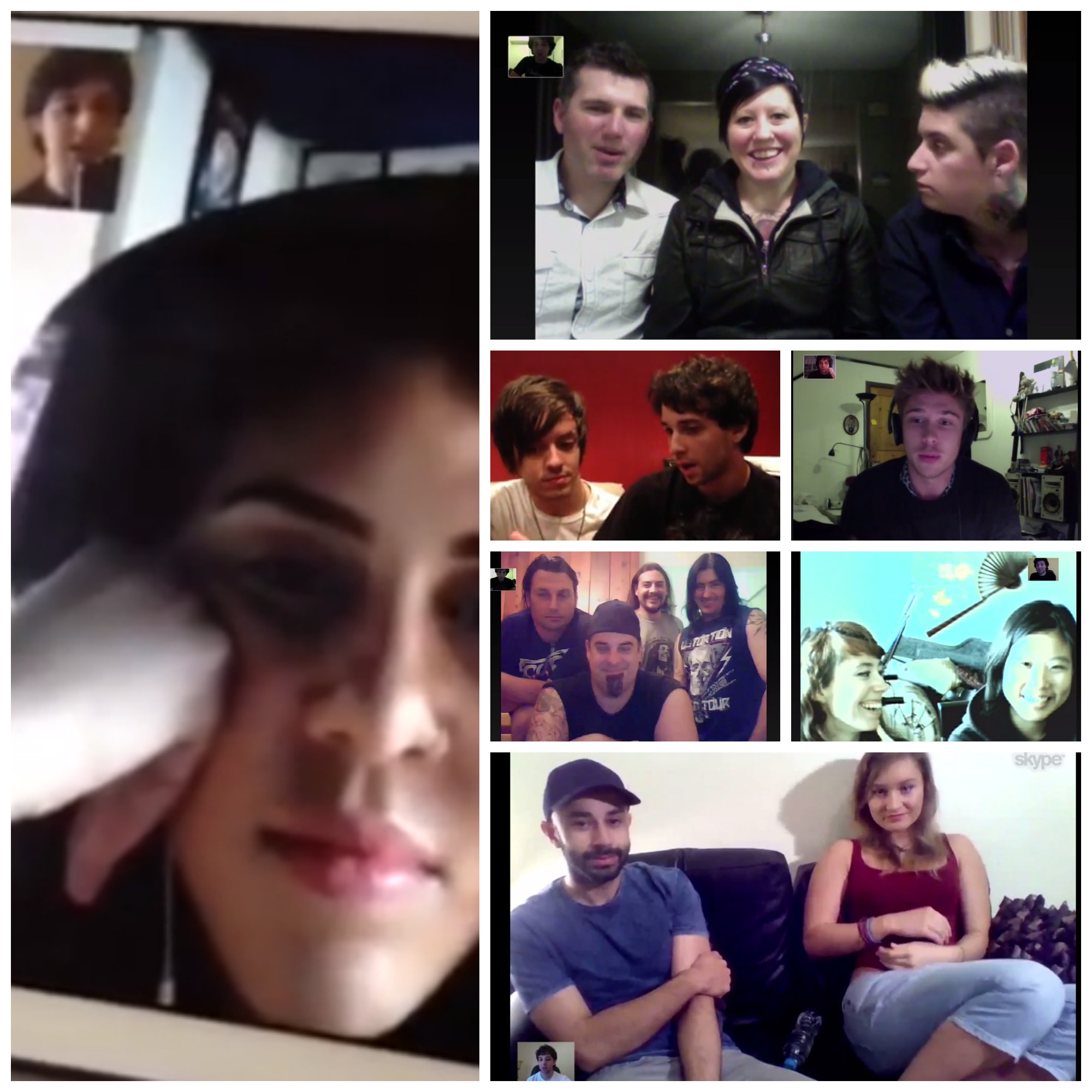
Me interviewing: Felice LaZae (left), Alabaster (top), Christopher Lindén (Neverblue) (mid, top-right), Me vs. Gravity (mid, top-left), Isobel Trigger (mid, bottom-right), Diamond Eye (mid, bottom-left), and Heel (bottom)
2. Music Isn’t Neatly Splintered Like Other Industries
In the music industry, the first thing to understand is that things aren’t as splintered and unbundled as they are in other fields. In other arenas, being an expert in data analytics or e-commerce sales might very well be enough of a foundation on which to build a company. But in music, understanding only one aspect means not understanding all of them. This is where the author failed (or rather, misunderstood) in this respect.

Music isn’t neatly splintered.
“Sales” in the music business can mean different things to different people; it could mean sales of tickets, merchandise, music files, special gifts, etc. And it could mean understanding those sales from the point of view of an artist, fan, promoter, venue, etc. Thus to say that one isn’t a “music sales domain expert” essentially means that one doesn’t understand that there are a very many different types of music sales domain experts, and that they are all very intricately interconnected in different ways. In approaching a music startup with this skewed notion of understanding, I believe the author began on a misleadingly difficult path to come back from.
3. Never Keep Anything from the Artists.
Understand that this is an industry where artists and people are used to being taken advantage of. That’s the norm. For many artists, industry experience has taught them to be wary, and anyone who is familiar with the dynamics of the industry can understand why. Sexual harassment, broken promises, money troubles, and limited access to resources are just a couple of things that plague artists daily.
The music industry is full of all kinds of realities that music consumers rarely see, and even more rarely care about: breakups, bad blood, intra-band politics, collaborations, no money, live touring, ridiculous royalties payments, new releases, band tragedies, sleazy industry “professionals,” loyalty to particular people—these are all things that music startup founders should understand way before writing any code. If not, you’re doing it ass-backwards.
The meaning of this is very simple: if you keep secrets from or mislead the artists you want to work with, you’re dead. Done. Finished.

If you mislead or keep secrets, you’re dead.
The author did the company a massive disservice by misleading an artist they were working with. Artists are not VC’s; they don’t give a shit if your product is subpar and you need to pull it back, if you’ve missed multiple ship dates, or even if the damn thing works right the first six times they try it. They don’t care. The only thing they really care about is not feeling taken advantage of. If you’re honest and up front, you’re golden, no matter how many ship dates you’ve missed. Their deepest loyalties (most artists, anyway) are to people who they perceive as supporting them the way their fans do. This is where you need to be speaking with passion, not tech logistics.
The music industry is very much like the tech industry when it comes to interconnectedness; everyone knows everyone. They tour together, play together, promote each other, and rely on each other to steer clear of sleazy people. Keeping secrets and misleading artists is one of the sure-fire ways to quickly find yourself a pariah in the music community. (And no, genre doesn’t matter. People talk, and word gets around. It doesn’t matter if you’re dealing with rappers or heavy metal bands, a bad reputation is a bad reputation).
4. Free Is Ubiquitous. Live With It.
Free is ubiquitous in the music industry. No matter how much people might try and fight it, it’s a big part of the future. Period. Fighting the free dynamic will only give you headaches and lead you faster toward the deadpool.

Free is here to stay, live with it.
If your company can’t exist in a very competitive way within the free paradigm, you’re fighting a losing war. And no, royalties aren’t going to save anyone, so don’t believe that they will.
The fact of the matter is, many artists embrace free. They see it for all its benefits. Again, this has to do with understanding the differences between different types of artists. If you can’t even make those distinctions, then trying to understand this whole point is useless and thus irrelevant.
5. Artists Tend to Be Open-Minded By Nature
The reality of it is, many artists tend to be open-minded by nature. These are not engineers focused on the logistics of how realistic something is. They don’t care about market-cap, valuations, competition, or which programming language will run the best.
This is the music industry, it’s inherently filled with dreamers. These aren’t people who care which classes you took in college, or how many programming languages you know. They are perfectly happy to tour the country in a crappy van, and hang all their hopes on the notion that they might be able to make a living playing music. And there are a lot of them.

Me with: Those Mockingbirds (top left), Bloody Diamonds (top right), The Steppin Stones (bottom left), Sunshine & Bullets (bottom right)
This means that if your ratio of yes:no doesn’t skew heavily towards yes (like 80-85%), you are doing something very, very wrong. In an industry where the content producers are dying to try new avenues every single day, if you don’t at least capture the attention of 8/10 with your pitch, you have a real problem.

If you don’t capture around 8/10, you’re doing something wrong.
Again, these are people who live on passion, and are not super bothered by logistics. If you put out a soft beta and it doesn’t load the first six times for an artist, no big deal. As long as they really believe in your vision, they will keep coming back. Period. And they will wait as long as they need to.
(In fact, if you’re not getting emails from artists apologizing for not signing up for your beta fast enough, you’re doing it wrong. This actually happens, and if your inbox isn’t full of apologies for delayed responses, you haven’t gotten through to your key demographic. I actually have emails sitting in my inbox from artists apologizing to me for not signing up for a small test fast enough, hoping that they haven’t lost their spots).
6. Artists Don’t Care About Your Software
Artists are not engineers. They don’t give a shit about your software. None. Zero. Zilch. They don’t care if it’s written in Ruby or Python. They don’t care how many iterations it’s gone through. Many times, unless they’re programmers themselves, they won’t understand what makes your software unique or special. And frankly, they don’t care to understand.

Artists don’t care about your software. Period.
Artists care about what the software will let them do. What kinds of doors will it open for them, and how many of their fans will they be able to reach through those doors? Is your software just like SoundCloud’s or Spotify’s? Doesn’t matter. The only thing that matters is their understanding of what the core dynamic is that the software is attempting to solve. This understanding is again distilled down to passion.
Most every artist I know—whether they’re from the U.S., Canada, Europe, or Australia— doesn’t give a shit how good your playlist-making algorithm is. It isn’t aimed at helping them, so they don’t care. If that’s your pitch, you should really reexamine your status.
This is where the author made a major error. There wasn’t a clear argument made for how this startup’s software would augment the passion dynamic of the artist. How would it affect the passion of the his fanbase? Would it give the him more dynamic tools to address the passions of the fans with regard to his music? Clearly there wasn’t enough of a distinction to dissuade him from using another platform.
This actually brings up another important point: if your music startup is so threatened by the existence of other music platforms that they can’t be used in conjunction, you have a major problem. The music landscape is populated by numerous services, platforms, apps, and companies. If you need to unseat one or more of these to be successful, go home and redesign your company.
7. You Need to Speak Their Language
All of this culminates in one singular, important point: you need to speak their language. Artists are like engineers, bankers, lawyers, doctors, or journalists in that they have their own language; their own buzzwords (both good and bad), their own tone, diction, emphasis, and colloquialisms. If you don’t know or understand these, you’re out of luck. No amount of good programming will make the difference if you can’t sell it to the artists.

Me in Dublin, Ireland with Chris O’Brien from the Riot Tapes
If you want to be a music startup founder, you better have at least a few years’ experience in actually talking to artists. Understand that conversations between you and the artists, and you and the music fans will be very, very different. Do not speak to artists the way you would to music consumers. They are not the same as music consumers, and if you treat them as such, you label yourself as someone who can’t distinguish between the two.
If you don’t have a cofounder on your team to translate the tech speak into artist language, you will have a very, very hard time. There’s no substitute. Being comfortable talking to other startup engineers or investors means very little in this respect, except for knowing how to put words together in a sentence. Other than that, you’re speaking a completely different language than the artists you’re most likely talking to. Artists are not engineers, so assuming that they are will kill you.

Me interviewing Cherri Bomb (now Hey Violet) from Amsterdam, Netherlands
To artists, metrics rarely, if ever, speak as loudly as passion. The passion is what comes across first and last. Most everything else sandwiched in between is somewhat secondary. If you’re a founder of a music startup, accept the fact that you’re going to be speaking to artists and music industry professionals (promoters, venues, organizers, merchandisers, etc.) a hell of a lot more than you’re going to be talking to your music consumers. And if you’re working in the major label paradigm, get used to talking to major labels (that means lots of lawyers and executives). All of these people have different dialects of the same language. This doesn’t mean that the music industry is impossible to crack for new music tech startups. It just means that if you’ve never been in the industry before, you’re starting very far behind the line.
You Need to Live This Passion
In the end, what this all means is that being a music startup founder has to come from a deep-seated passion. It has to almost be a nagging need that you wake up with. It’s not a one-and-done scenario, where if your first crack as a music startup doesn’t work you move on. If that’s the case, you don’t care enough—you don’t love it enough. You need to live this kind of passion. From how you dress to the slang you use, the little things matter, even if they shouldn’t. And trust me, the artists notice. It becomes an “us/them” mentality. You’re either with the artists—you know them, you understand them— or you’re not. There’s rarely a middle ground.

Me at Warped Tour 2012, with: June Divided (left), The Nearly Deads (middle), Mighty Mongo (right)
In the music industry, if you’re an artist and don’t use every tool at your disposal to try and grow a fanbase, you simply don’t care enough. That sounds callous, but it’s true. The same is true for music startups—the only thing that will really get you through to the other side is your passion. You need to breathe the relationships with your artists; you need to be friends with them on Facebook, know them by their first names, know their birthdays, why they started playing music, what their ambitions are—everything short of how they take their coffee, and maybe even that.
Your Code Can Wait—They Can’t
All of this information comes from conversations that never stop. If you stop messaging an artist because you’re busy fundraising, sorry, you’re dead. If you can’t be bothered to respond to their emails because you’re too busy fixing you’re code, sorry, they don’t care, you’re finished. Your code can wait—they can’t and they won’t.
Ironically, this is what I find the most invigorating about being a music startup founder. I love talking to the artists and contacts—I thrive on it. I’ll respond to Facebook messages from artists in Canada, Denmark, Ireland, or California at 4 AM. And I do it because I love it. If you’d rather be writing code at 4 AM than talking to artists in New York or Germany, don’t do a music startup. Do something else that’s not people-based. Because in the end, you can’t hack your way into personal relationships. These relationships take time and care—they don’t happen on your schedule just because you’re trying to code your next app update.
But the flip-side is also true. If you have them going in, you’re lightyears ahead. You have a built-in base that’s invaluable. That’s how you really need to build a music startup: based on the relationships you develop with the artists. Everything else flows from that.


 Adam Marx's Mind